FEATURED POST

50 Places To Catch Fish... Part 3

Showing posts with label bluegill. Show all posts

Sunday, June 10, 2018

Larry Koon Landing


Larry Koon Landing - A Foto Montage
June 10, 2018

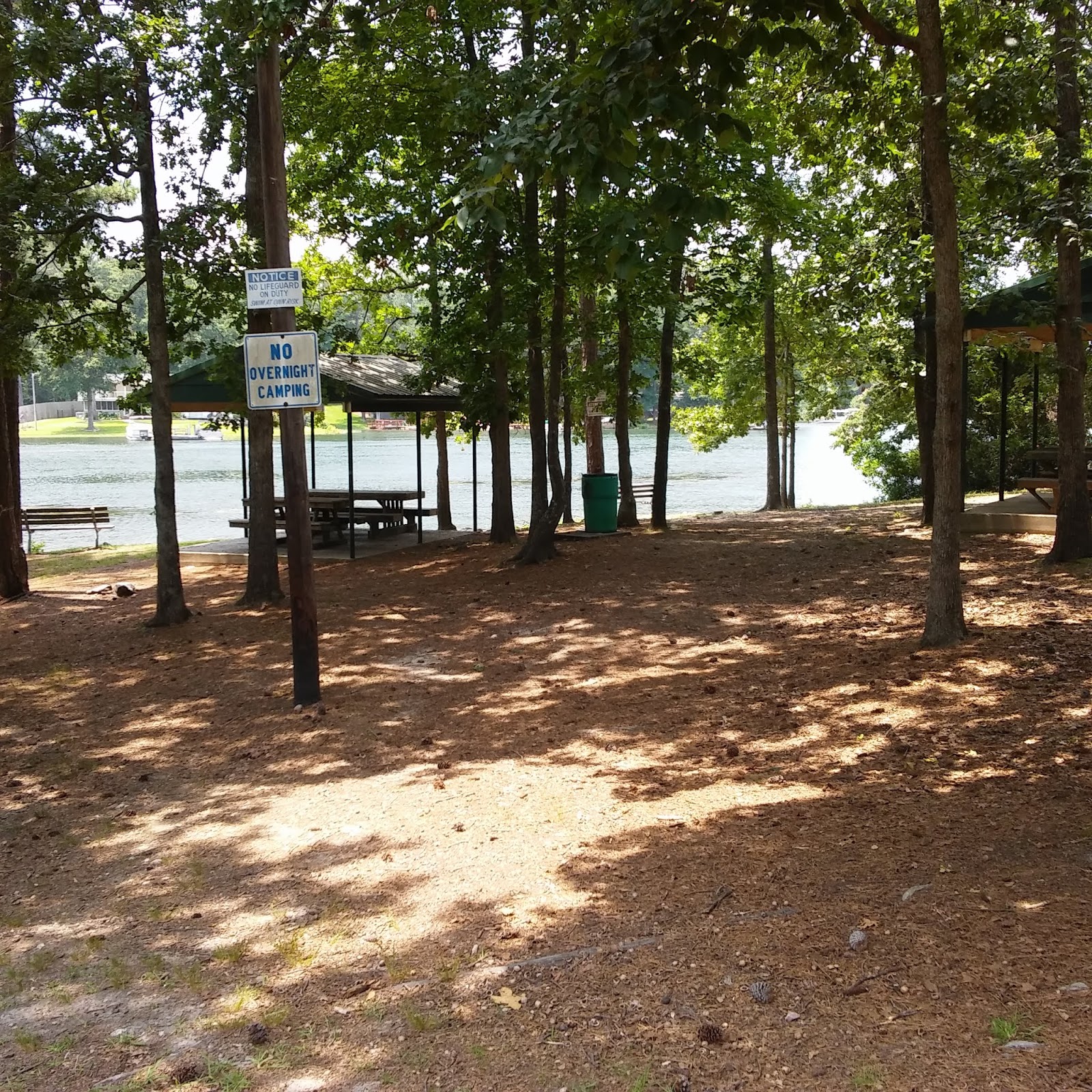
I was so happy with the clear water of my last trip that I wanted to keep the ball rolling. I chose a public boat landing, one I've been to many times before. 

The first time I visited Larry Koon Landing it was to do some water metal detecting. That went pretty bad, as the substrate here is hard rock. This means there's no way to scoop up any treasure, even if you did find it.

And we didn't.

In more recent times, Larry Koon landing has been the launch site for a number of fishing junkets around Lake Murray's mid-lake area, and especially the islands which are just a mile or two out from the ramps.

I knew the place.
I examined my hydrographic maps.
I scouted with Google Earth satellite.
I was ready to get out there.

The flies I was taking out. Usually I have 4-5 small boxes of flies; this time I brought just a sampling.


Weeds everywhere. This stuff blanketed the area around the ramp and you really had to work around it - and be patient with all the hanging up.


More weeds, more weeds, more weeds.


The skunk buster - first fish. Small red breast.
Caught on a Pheasant Hornberg Soft Hackle (seen beneath the anal fin.)


Red Breast on a James Woods Bucktail

Among the weeds near shore, I had noticed several bedding areas. They were obvious - their round, light colored shapes stood out from the darker bottom. They had a fish or two hanging around, but they seemed to be attracted more by the oddity of the beds. There were no obvious fish guarding nests; the ones I saw were not clean, but had collected the usual detritus in them.

Then I happened upon a large bush overhanging the back of a tiny cove. I cast back towards the tree, and my fly was immediately slammed by a large bluegill. This fish wasn't playing; he snatched the #10 Muddler HARD. 
I was about ready to put him on the reel... And that's how the next 8 fish went.
Cast out towards the spot, and either they would tear the fly right off the surface or it would move a few feet and get nailed.   


Once the bite slowed I finned over to the spot and saw 10 or so active nests, and several others that were obviously abandoned. Its about a month passed the peak breeding period, but bluegill will nest several times throughout the season.... so I eased off and left them to it.


Ramp #3


Ramps 1& 2


Loan-A-PFD


Welcome - but you cant stay


Monday, May 28, 2018

Flip Flop Poppers

The Flip Flop Popper

Cheap footwear into super fish catcher

By David Hutton
May 28, 2018

Poppers!

    Just the word makes most fly anglers sit up and take notice.
Some get antsy just thinking about poppers.


    Since E.J. Peckinpaugh and Will Dilg marketed the first commercial cork poppers in the 1920's, fly men and women have been using the venerable popper to catch fish. 
    Bass were the original targets of the popper, but today most any fish you can name has been taken on them, both in salt and fresh water.
    But we have come to think of them mostly as warm water flies for bass and, increasingly, bluegill. 
Today, few other fish are associated with the "popper" as much as these two.

Materials
    Many materials have been used for poppers, with one obvious requirement: it must float.
    The first poppers were made in the Ozarks in the late 1800's, from beer bottle corks and turkey feathers. Since then, cork has been the traditional go-to. Its a little heavy, but it is rugged.
    Balsa wood came into the mix in the 20th century prior to WWII. Its light, but can be a tad fragile.

    But these minor flaws aside, millions of poppers have been made from cork and balsa, alone. 

    But people like to experiment and try new things. 
    For instance, Louisiana innovator, artisan, and author, Kirk Dietrich, turns popper bodies on a small lathe using paulownia wood - a very light, fine-grained, and warp-resistant hardwood. The works of art he creates this way are testimony to this materials' ability to take a finish.

    But increasingly, expanded plastic foams have been used to the point where I'd say they now dominate the popper field. 
    First was Styrofoam, the trade name for air-injected polystyrene - the same stuff cheap ice chests are made from. 
It is buoyant, can be molded in many shapes and is, well, cheap. But it can be crushed easily and will melt if kept in contact with soft plastic lures and baits. 

The Solution
    Enter "craft foam," the generic name for ethylene-vinyl acetate (EVA). 

    The stuff is produced in a rainbow of colors and comes in everything from sheets, to rods, to blocks.
     It is tough as nails, can be easily shaped, and is practically impervious to anything you or the environment can throw at it.
For the man or woman who ties popper flies, it overcomes the limitations of Styrofoam, cork or balsa.

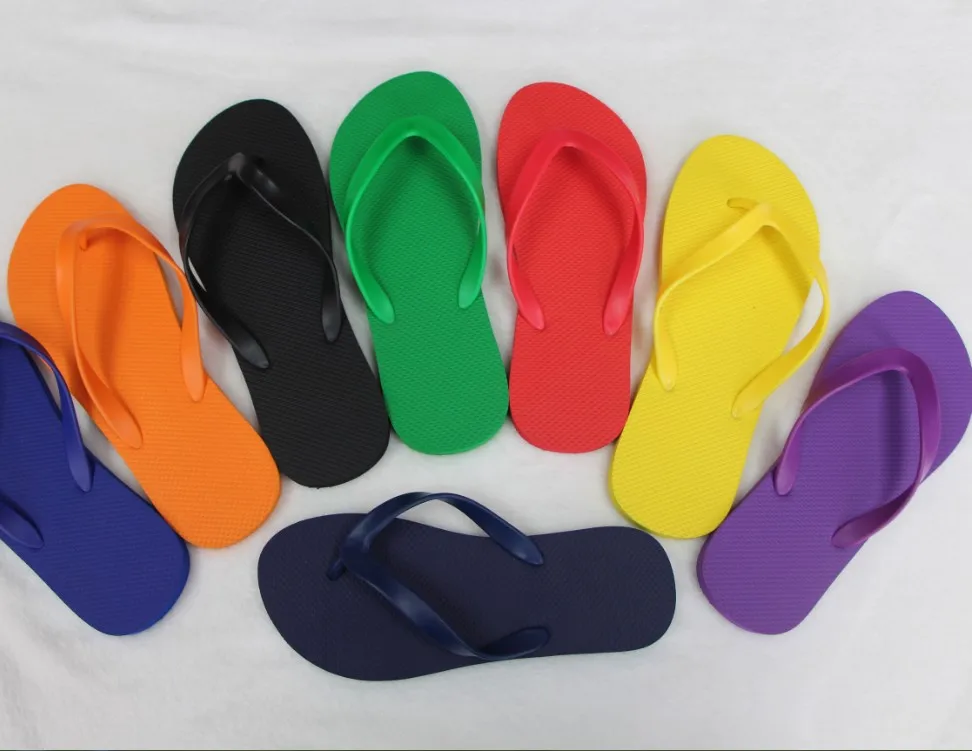
    And among the many things it is made into (besides flies) is possibly the least likely of fly tying materials - the cheap beach and pool sandal
Also known as, “Flip-Flops.”
    These can be found in almost every dollar, drug, and discount store in the country. They usually cost anywhere from 89 cents, to a few dollars for the fancy ones.

    I often find them floating along the shore, the mystery of their loss hanging over them.


Image result for foam flip flops 
Cheap Flip Flops

    But whether you buy them or find them, how do you make a cheap flip flop into a fish catching popper fly?

I first learned of this technique from fellow float tuber, Big Bluegill member, and Oklahoma man, Greg McBill. I'm adding a link to his input on the topic....
 

Greg McBill on The Flip Flop Popper

How I Do It
    I normally make my poppers for use on bass and bluegill, so I'm not making gigantic ones.
    I use either a sharpened piece of thin-wall, 3/8" stainless tubing, or a spent .357 Magnum cartridge casing. Pretty much the same thing.
    The idea behind this two-fish role is called, “The Bass Bluegill Lap,” and it started 
with the late, great Jack Ellis.
Guide and author Skip Morris has an excellent 2-part article on it here...

Bass Bluegill Lap 


    The cutter I've just described is forced down into the foam sole of the flip flop and turned gently as it goes in. 
I also chuck the cutter in a drill and spin it for a cleaner cut. Either way,  you end up with a pretty neat cylinder of the foam.

    Once the body cylinder is cut out, I sometimes lop off a piece of the rear at a 45° angle, to give the body a taper.
     You can also spin the body on a mandrill in a Dremel tool, and shape it with a sanding stick.
But, more and more, I forego the shaping and use the cylinder straight from the punch - the fish don't care, so shaping is just extra work.

    Once the body is formed, I use a sharp single-edge razor blade to cut a slit in the bottom to accept the hook. 
The hook I normally use for my poppers is a #4-#6 Carlisle (aka, "cricket hook"). 
    I bend a hump kink into the hook shaft with round-nose pliers, which prevents the body from turning around the hook shaft. Then, I wrap fly-tying thread around the shaft where the body will go. Finally, I position the foam body on the kinked shaft, hold it closed with a clothespin, and apply super glue to the joint. 
In a few seconds, it’s secure and solid.

The Forgiving Hook
    I also apply some round nose pliers to open the hook gap a little, and bend the protruding hook at a slight downward angle. 
    These hooks are classed as "light wire," which is adequate for bass and panfish with fly tackle. But, because they are heat-treated wire and not forged steel, they give you this ability to modify their shape.

    Here are two more good reasons to use these light wire hooks:

1. They pierce a fish's jaw easily.
2. They can be pulled free from snags


    If kept sharp, these hooks nearly set themselves.
    But sometimes they snag on wood and other obstructions. When that happens, just apply steady tension on the line and pull straight towards you.
    If you tie a good knot, and your tippet can take the strain, the hook will begin to straighten... and voila! It normally pulls free from the snag.

    Then, use your forceps or pliers to bend it back into shape and you're back in the game. Easy-peasey.

The Finishing Touches
    Once cemented on the hook, the foam body is decorated with dots, stripes - and eyes. I use plain old nail polish for this work. 
    You can decorate to your hearts content, as this is the "artistic" phase  - again, the fish don't care, but you probably do.
    Me, I keep it simple. But, do what you want. 

    Once you've decorated the body as you like it, a coat of clear nail polish finishes it off. That's it.

Say No To Epoxy
    How about an epoxy finish?
    It seems that nowadays, people simply must add epoxy to everything... and poppers are no exception. These folks chomp at the bit to mix up a batch of epoxy, or to whip out the ultraviolet flashlight for a UV coat. 
But I don't find it necessary with these EVA poppers. 

    The foam is bullet-proof, on its own, and it isn't harmed by smacking it into wood or rocks. So, it doesn't need a hard, epoxy shell for protection.
    It won't soak up water like natural materials, and it makes little difference to the function if it is not glossy. 
And besides, if an epoxy finish coat isn't there, well, you can't chip, ding, or knock pieces of it off.
    There is also a weight factor with epoxy, although that's probably negligible. But above all, its just easier to not fool with it. 


    With all that said, if you have epoxy withdrawals unless you smear some on, then use it. 
But you don't need to. 

The Dressing
    The tail dressing is the last step, and can be anything you want. Deer hair, squirrel hair, calf tail, rabbit or fox, bucktail...all these and more can be applied. 
    For feather dressings, marabou is an option, and the standard embellishment is 2 or 4 cheap, Chinese cock neck or saddle hackle feathers. 

    I've used them all, and I keep it simple....

1. Add a sparse tuft of deer hair behind the body, first. Tie this to the hook shank so it flares just past the bend; make it about a hook gap in width. In the next step, I'm adding hackle feather "legs" - and the deer hair helps hold them apart. 

2. Tie in 2 or 4 proper sized hackle feathers. These should be about hook shank in length. Tie them in on each SIDE of the hook, so the deer hair splays them apart.

3. Complete the dressing by wrapping another hackle in the gap between tail and body.

    How about rubber legs? Many folks just gotta have rubber legs on their poppers, and the fish don't seem to mind. Not that its required, mind you; long before rubber hackle came on the scene, people were catching fish without it. 
    But if you want to add legs, it is easy.


    Just push an embroidery needle threaded double with mono through the foam body, and pull it out to form a loop on the opposite side. Load the loop with the rubber legs and then pull them through. 
    See the illustration above.

    I like both round rubber hackle, or the silicone strands used to make spinnerbait skirts for bass. A tiny dot of super glue where the legs exit the body secures them.

A Few Pictures


Pond bluegill on a black Flip Flop Popper


Flip Flop Popper Chomp!


Assortment of Flip Flop Poppers

    The six from the top, down, are variations in decorating and size. The third one down is the black popper from the preceding fotos. It is still in my fly box, and has caught its share of bass and bluegill along the way....and is little worse for wear, today!

    PS the last two are poppers made from small cork indicator floats. Not the same, but still very nice

So, now you know. Try some Flip Flop Poppers yourself and see what you think! 

------------<~~>------------

Writers should strive for a job well done... even half-baked ones like me. So if you found value in this article, please like, comment, and share it. 

Do you want to add the catching flies seen here to your own fly or tackle box?
Do you have ques
tions, compliments, or suggestions?
If so, email me at
...dahutist@gmail.com


Thanks so much for reading, and...


Tight Lines,

Dave Hutton

© All rights reserved, David Hutton/Palmetto Fly N Fish 2018/2025

Saturday, May 26, 2018

Of Sleeping Late and Fuzzy Nymphs

Of Sleeping Late and Fuzzy Nymphs


The air is muggy; a weeks worth of rain has left the ground soaked and spongy. 
What's worse, weathermen and facebook pundits say we're in for more of the same. 

And after the work week I had, sleeping til noon on a rainy morning sounds like a good plan. But, my eyes pop open, and 7:00 am will have to do. 
I look at the clock and groan; hey, it beats my usual 5 o'clock in the morning.

After making the coffee, I look outside and see it ISN'T raining right now. Seems like a perfect time to mosey down to the neighbors pond, aka, "Fly Lab II," and wet a line.

Yes, I really do mosey. This is South Carolina, after all. 
People here mosey.

The Season is Here
Approaching the pond, its obvious Spring is well underway. The surrounding grass is high and lush, the underbrush has grown to choking fullness, and the pond is sporting a fringe of green algae weed. The tadpoles of a few weeks ago are now conspicuous by their absence.

However, dragonflies are out in force. Their darting flight and swooping moves create a flying circus all around. I count a number of types I recognize, and one or two that are new to me.

The big boys of the bunch are the Rusty Dragonflies. These guys span your hand with their wings and you can hear their humming as they power by your head.
Small blue damselflies flit here, and there, their black, helicopter wings beating the air.
Swarms of very small dragonflies, the size of a thumbnail, well, they're new to me. 
My favorite, the Eastern Whitetail Dragonfly, makes a welcome appearance. 
And I watched, fascinated, as a 2" green female dips her abdomen and deposits eggs among the algae weed.  

Warmth and a lot of rain have transformed the pond and its environs into a new place, and I wonder if the fish are still here. 
As if in answer, a large, "KERSPLASH"  is heard from across the pond. Something has blown up the water in the far shallows; something is chasing something else, over there, and I mutter to myself, "Well, well, and hello. Lets get to it!"

The Business At Hand
Today I'm fly fishing. I've brought an assortment of flies, seen here


They are, from top to bottom:

1. Flip Flop Popper (black)
2. Old Faithful Popper (green)

3. Moodah Poodah (tan)
4. Casual Dress nymph (left)
5. Mink and Pheasant (a Casual Dress variation, right)
6. Bullys Bluegill Spider
7. Reverse Tied Black and White Soft Hackle


I tie on "Old Faithful," a small, #10 popper I've had for, well..., come to think of it, I don't really know how long I've had it.
It has been repaired a few times, has had a couple of color changes and dressing versions, and it keeps on popping along. Today it is chartreuse, with a faded red mouth, leering eyes and a jaunty feather tail of tan Indian neck hackle. 


I un-spool some line about the length of my 9 foot, 5 wt. fly rod and prepare to cast the fly. 
Ready....set.... and.... STOP!
I'm tangled up in the leader. I have to put casting on hold while I first sort out the mess. 

Its like that in fly fishing.

You get all ready, everything is set, but you lose just a split second control of the line. 

Then, it's BAM! and you've got a mess on your hands. 
Something they don't tell you about in fly fishing is you need patience and a cool head. 
Don't do anything in a hurry with the long rod. 
I suppose this is why only a few people do it well, and for very long. To coin a phrase; "if it was easy, everyone would do it." 

Back To The Business At Hand
It was just a minor tangle (as tangles go), so I was soon sorted and back at it. A swirl of the rod tip, a few flicks of the wrist and voila! the line was stretching toward the far corner of the pond and Old Faithful was back on the water where it belongs.

And that's pretty much were it stayed.
Untouched by fishy mouths.

Its also like that in fly fishing. What you think is gonna work, well,... it doesn't.

Over there, look - it's my perfectly good popper, floating all buggy and googly-eyed! 

I can see it, and I gently twitch it.
stall it, waiting.
I pop it.
I wait some more.
I make it dance a jig.

And the quarry ignores it. The game is a bust.
Every other writer and fly man in the world seems to be filling their creels on these "bugs," and I get nothing. 
Not even a courtesy swim-by.

Well, something else you learn to do in fly fishing is adapt.

"Alright you buggers, if the popper wont do - lets see what will."

I tie on a Mooda Poodah, which is a craft foam and deer hair, bug-thing with rubber legs. 
"What do you think of THIS?!" I shout, and cast it back into the same spot. And that was the trick.

The fly sat for a few seconds, quivering, legs dangling. Then, there was a splash, and it was taken under, savagely. The line straightened out and I was dumbstruck. 

But in fly fishing, you have to be ready for this. 

I woke up, grabbed for line and started stripping. 
I got the situation under control. The rod is bent, the fishes weight is felt.
At that moment, a 1lb. 'rocket bass' leaped from the water, flew about 4 feet and tore off across the pond.  This was more like it.

Now, I know a lot of you like to see bass flying through the air. That big head flailing, those red gills flaring. 
Why, the more aerial displays, the better. 
But I'm the opposite. I try to keep them below as much as I can, with tension firmly maintained. 

"Keep the hook in their mouth, not waving around with their head, out of the water" - that's my motto.

And I did exactly that. 
And that feisty 'green trout' still managed an LDR (long distance release), despite my best effort to the contrary. 

Just like that, the fish was gone and a
ll I got back was the fly. 

At that point you say, "Sometimes you catch them, and sometimes you don't."
The fly was taken, the fish got hooked (briefly), and I got my fly back. That's a good start.

Working the Water Column
I wasn't planning to be there all day; in fact, I only had about 45 minutes to fish. If I was going to work the water column, from surface to the bottom, it was time to switch up.

"Okay, the Moodah Poodah caught a fish," I said. "But, I've fished them for a few years; that's old news. Let's see what we can do below the surface, with something new."

Because I also tie my own flies, I usually have an assortment of untested ones ready to try. I reached for my fly holder and took a look at the offerings. 

Besides the poppers and surface bugs, I also brought along a couple of sub-surface nymph and soft hackle patterns to test out. 
I took one of the "Casual Dress" patterns loose from the holder.

The Nymphs Are the Ticket - Again.
Something I've learned from this freshwater fly fishing business is this: If you're not fishing nymphs of some sort, you're missing fish.
They don't have to be exacting mimics, either. Representative of the type is enough. The "Casual Dress" nymph is of the latter sort. 

Its tied from muskrat hair and a little ostrich. This makes it fuzzy, wiggly, and, well, just plain nymph-y. Natural fur is arguably the best material for these flies.

And the fish were nailing them every second or third cast. They liked a slow retrieve with a sink-and-quick lift. Their take was either a rip-snorting snatch and run, or a gentle heaviness in a sideways direction. 


Nymph Mouth Rocket Bass

I also noticed something unexpected with the Mink & Pheasant version of this nymph. Call it one of those, "Ah-ha moments" that often happens.
The M&P nymph, like the Casual Dress, is a hair-and-feather job. What happens is, it dries out a good bit during line-out (false casts), and then floats for a while in the film. It then submerges to fish wet.

But, while it was still at the surface, I noticed fish were coming up to slap at it. I assume these are bluegill, as this "smack and stun" trick is the bluegills M.O. They do it to knock the wind out of bugs that hit the water; they then come back and pick them to pieces. It was the only sign of bluegill I saw.


Mink And Pheasant Nymph

I also fished the one soft hackle I had, a Black and White Reverse Hackle.
It's a body of heavy black thread, ribbed with krystal flash, and a collar of reverse tied fibers stripped from a hackle feather.
It's a very basic fly, but very adaptable and a good fish catcher. 
It is also a way to use the cheap, non-descript hackle feathers that might otherwise be too long for the hook size you're using. 
I'll detail this one in another post, so make sure you subscribe.

Soon, it was time to go and get busy with the days non-fishing business. We need new tires on the car, preparations for the family Memorial Day are in the schedule, and .... well, there seems to always be something else.

But that's okay. At least I got to sleep in.

Tight Lines and Thanks,

David

Don't forget to subscribe and leave a comment.
David Hutton, © 2018
Palmetto Fly n Fish On Facebook


Monday, May 21, 2018

Palmered Wooly

The Palmered Wooly - Will it Work?

When simple might be better...

David Hutton Palmetto Fly N Fish©
May 21, 2018


I'm not really sure where I got the pattern described below. It may have been something off the internet, or something I tied and recorded with an eye towards posting at some point.
I expect it was the former case.

Adios Internet
See, there was a time not too long ago that I didn't have the internet. Well, for a long time really. When we moved to our current place, we got a culture shock. To say its in the middle of nowhere might be an understatement. 

You leave town miles behind, and you cant help but notice there are no power lines or poles along the way.
When you finally reach our little shack in the woods, you realize that electricity has come a very roundabout way to our crossroads - and there's no room for internet. 
At least not the hard-wired, unlimited gigabyte sort every body else enjoys these days.

So for a long time, I was a collector of internet information... an info-miner, you might say. 

Every chance I got, I downloaded whatever I found on fishing and fly fishing to a memory stick. 
I wasn't concerned about where it came from, and I wasn't scrupulous about capturing those details. Just get it on there and go for more.
Subsequently, my files are a big repository of Universal Fishing Joy and Goodness, but I don't always know where I got the content. This is most likely one of those items.

Simple Is The Word
Its the simplicity that I wanted to present here. This is really just a Wooly Bugger variation. But it lacks much in the way of embellishment. This isn't a fly pattern gypsy wagon.

I imagine some of you may wonder if something so basic can catch fish. Most pages are full of Wooly Buggers that are anything but simple. The gaudier the better, it seems. 

I saw one guy recently asking for opinions of his; it had a huge, golden bullet head, three colors of body and tail, tastefully contrasting hackle.... well, I was tempted to offer my opinion, but held my tongue. 
This has gotten easier in my older years. 
Funny how that works.

My First Wooly Bugger
But, can simple work? Well, for a long time I didn't fish a Wooly Bugger - ever. I knew of the fly, but I never got around to fishing one, and it was kind of a personal rebellion to resist its siren call. 

So, one day at the vise, the planets aligned. I grabbed a #6 hook, some scrap feathers and well, I caved in. 
Cosmic forces had risen - and I tied a Wooly Bugger.

As I recall it had a short tail of marabou fluff from the base of a feather. The body was more of this marabou stripping dubbed on, and a non-descript hobby store hackle completed the outfit. 
It was drab, grey-brown, and honestly, it looked like a turd. 

It was a passable Wooly Bugger, yes, with all the right stuff.
But it looked like a turd. A Wooly Turd.

I didn't expect it to do much.

The Proof Is In The Turd Pudding
It got its baptism one day while fishing with my friend, Donald Schmotzer. We were at the west end of Wessinger Island on Lake Murray, when I tied on that Basic Bugger and started creeping it along the bottom. I remember it like it was yesterday; I can take you to that same spot today.

I hadn't mentioned the Wooly Turd to Don, because I'm always changing flies. I fish a while with one, then try another. It's like a ritual with me. 
And since I have a lot of flies I've tied, I may as well use them, right?
Because of this, he's come to expect me always fussing with something. 
So, when I let out a whoop, he turned to see what all the commotion was about. 

The rod bent in a way I wasn't expecting, arching over into a hoop that nearly touched the water.
"What you got there?" he asked.
"I don't know, but its something..." (
A loss for words, I guess)

Surprisingly, it turned out to be a stout ol' shellcracker, about a pound. It gave my little 5 wt a tussle, and it was a bit of a triumph for me. 

Up until then, I had never caught shellcrackers on anything but worms. 

Once that fish was landed and released, I spilled the beans.

"That was a Wooly Bugger of all things, Don. 
Can you believe that? 
Of all the zillion patterns, I got that on a Wooly Bugger. 
And it was the first one I've ever fished!"

"Really? Your first ever?
Man, I use to use those things some years ago, and caught a lot of fish on them. But I kinda got away from 'em, for some reason. They'll catch fish, that's for sure."

That was sort of Epiphany Moment for me, and I guess for Don, too. I've noticed he's been catching a lot of big bluegill and bass on a small, black Wooly Bugger these days. 

I've also seen him get at least one big 7lb. catfish that way. 
Another we only imagined was a catfish, as we never got to see it before it broke off... also on that same black a Woolly Bugger of his. 
I should say here he ties one of the tidiest Wooly Buggers I've ever seen. Mine never come out so neat.
They always look kinda like turds.

So here is the simple, basic Wooly Bugger pattern that popped up in my files. 
I closed my eyes, pointed the mouse and clicked.
This is what you get.
No pictures. 
No lengthy instructions.
Nothing but the basics.

Will it work? Try it, then let us now.

Materials
Hook 2xl or 3xl nymph hook, 6-12
Thread Red
Tail Black Marabou and a few whisps of pearl krystal flash
Ribbing Fine Gold Wire
Body Olive Chenille
Hackle Grizzly Hen Neck, Palmered
Head Black Bead

Tuesday, May 15, 2018

Big Bluegill Tips from Terry Wilson

Deadfalls and Bluegill Terry Wilson

Look for large bluegills in and near fallen wood.


Weed beds, stump patches, docks, rip-rap, points, humps and depressions, all are common bluegill habitat and can serve as temporary home base for bluegill throughout a season, depending on certain conditions.
All of these areas deserve the angler’s attention, for many reasons.

But, there is one structure form that is consistently above all others for big bluegill; it is the one all lovers of big bluegill should focus on first. That structure is DEADFALL WOOD.

WHY DEADFALL'S?
By definition, a “deadfall” is any bank-side tree or woody brush that has toppled into the water. But a prime deadfall is one where the branches also extend from the shallows into relatively deep water. Such deadfalls as these are worth seeking out. They provide everything the bluegill wants, and will become the year around home for big bluegill..

Food
No, they don't eat the wood. But small and micro invertebrates, nymphs, tadpoles, fish fry, minnows and even terrestrial insects will call the wood home. This bio-load represents a diverse source of food. If it could be measured as a factor of “living weight,” it is hard to imagine just how much food this might be. 
Bluegill are even known to nibble the green algae and other flora that grows upon the wood itself.

Safety
All fish are potential food to something else. So, when not feeding or breeding, their main instinct is survival. And survival means staying away from those fish that would eat them. There is no better way to do this than to hide in solid, tangled cover. A downed tree, with all its branches in the water makes an excellent place to safely hide.

Concealment and climate control
Here we are referring to safe hiding places that span a range of depths. Fish might find the first two needs, food and safety, in more open water. But concealment among deadfalls with deeper water at hand is preferable to shallow options for a few simple reasons:

  1. It makes it easier to blend in, thanks to the potential for diffused light
  2. The vertical column surrounding the wood can offer a wider range of more comfortable temperatures, light levels and oxygen.

Without this deep water element, the deadfall may host big bluegills that visit early or late in the day to feed. But. Since bluegill, as a species, congregate according to size/age, it will probably only be home to young specimens the rest of the time.

NOTE: The importance of deep water adjacent to the deadfall cannot be overstated

FINDING THE BEST DEADFALLS

If you specialized in just fishing deadfalls, its no stretch to say you could consistently target large bluegills throughout the year, under all weather conditions.
However, to do that, you must first locate the best ones – the Prime Deadfalls.
Here are the main factors to look for, in order of priority.

Factor One – lots of branches
The first factor that makes deadfalls attractive to bluegills is many, many branches to form a canopy of protection from overhead predation and sunlight penetration. In time, the branches become covered with moss and other plant life, which attract microorganisms that in turn attract insect larvae, nymphs, and minnows. Large bluegill can therefore avail themselves of this virtual smorgasbord...

Some flies to use, in no particular order....
  1. Sawyer-style Pheasant Tail and Hare’s Ear Nymphs - these are good all- around choices.
  2. Small streamer patterns - the largest bluegill are fish-eaters and want to feed on minnows.
  3. Simple marabou patterns tied with bead heads of various sizes and weight would take the third place seat.
Factor Two – Depth
As temperatures change and light penetration varies, big bluegill adjust their positions up or down in the water column. This may be along the main trunk of the tree, so a pronounced vertical element is important. 
It may also be among the extended branches of the deadfall, where they span widely across the water column, top to bottom. 
In other words, the deadfall should have its head in, and adjacent to, deep water.

In general, bluegill will move progressively shallower when sunlight penetration is reduced, and the water is warm. In other words, extended overcast periods coupled with warm water temperatures will cause the bluegills to move into the shallows of the deadfall and fan out laterally along the branches.

Conversely, once the sunlight returns and brightens the shallows, the fish will move deeper, into shaded areas nearer the trunk and large limbs of the tree.

Factor Three – Temperature
Temperature is arguably the most important of the factors, because it puts comfort and oxygen into play. But you can't do much about water temperatures, as a feature - they are a factor of the seasons.

However, a big spread of branches up and down the water column depth on the best deadfalls means the fish can move to the temperature they like best. So focus on the first two elements – depth of water and plenty of branches. Then you can find where in the column the fish are holding.

Falling water temperatures at the surface, as in the Fall or very late winter, will move bluegills progressively deeper within the deadfall’s branches in search of warmer water.

As the pond or lake water begins to warm with the advance of Spring, sexually active males move to shallower water along the stem of the deadfall and eventually to shallow flats immediately adjacent to the deadfall in search of suitable spawning sites.

When water temperatures and the length of daylight hours coincide to formulate spawning conditions, the females join them along the shoreline to either side of the deadfall.

THE SEASONS OF THE DEADFALL

Pre-spawn through Spawn
From pre-spawning movement through the males’ ritual of guarding the newly-hatched fry, the fishing is easy. Anything retrieved in close proximity to the spawning beds is smashed with reckless abandon. 
This is the time for floating lines, 7 ½ – 9 foot leaders tapered to 5X tippets and flies in sizes 8 and 10. 
Bluegills are aggressive and territorial at this time, and poppers can provide exciting surface action. 
Wet patterns are equally effective.

Tandem fly rigs, are a real boon. Consider the inventive, “popper - dropper” (a popper and a wet pattern fished 12 to 18 inches below) or a dual cast of wet flies; both can increase your chances of success and help you select the most productive flies.
Double hookups are common during the spawn and offer some of the season’s most exiting action. Two 8”+ bluegills, each twisting and diving to escape, are guaranteed to produce a memorable fight.

Post Spawn - Summer
Summer is a time of abundance for the residents of the deadfall, and their lives assume a more leisurely pace. 
The spawn is passed, the water warms and food is plentiful, and weather patterns tend to stabilize. These prolonged, consistent conditions more predictably determine the bluegills’ location in the deadfall.

As water temperatures rise into summer levels, several things are happening:

a. The metabolism of the bluegill increases, so they need to feed often among the branches.
b. Sunlight penetration increases, and the fish move deeper for the comfort of shaded areas.
c. Generally, they will migrate shallow in low light to feed, like morning and evening.

In short: they are in a positive feeding mode.
They hang around deeper most of the time, but they can be found shallow morning and evening. This is the universal summer pattern for bluegill.
  • A falling barometer also prompts the residents of the deadfall to feast in advance of a storm...so, follow the weather, and get out there 12-16 hours before the front arrives.
  • Long periods of low light, such as several days of overcast skies, enable bluegills to take up the shallow feeding stations already mentioned. They are a bit more bold, at these times, and will forage along the outer branches of the submerged tree.
These shallow water fishing opportunities can be matched with floating lines and surface flies, or with unweighted wet patterns that are allowed to fall slowly among branches located near the surface.

The Bad News of Summer
The summer isn't all rosy among the deadfall, however. Because there is much more available forage during the warm summer, bluegill become rather selective. Both fly size and color becomes important. 
Sizes 8 and 10 will get most of the action until the “dog days” of late summer, when dropping down a hook size improves the fly’s effectiveness.
Our rule of thumb for color selection depends on the visibility under different lighting conditions.

  • Clear water and bright sun: use lighter, more reflective colors
  • Murky water and/or overcast: dark or fluorescent colors

Despite such general guidelines for color selection, it’s best to change flies frequently if the action doesn't kick on, or slows. When you aren't getting strikes, its a sign that you've chosen a fly that isn't appealing to them. It doesn't mean they aren't there.

If all other factors are equal, and you have followed the rest of the guidelines here, let the bluegill tell you what they want by trying different flies.

Eventually, summer’s long days of intense sunlight penetration, and very warm water drives bluegill into deeper water, often close to or beneath the main trunk of the tree. They may be very close to the bottom, as well.

This is fishing that separates the men from the boys,

The fish are not caught as readily as in Spring and early Summer; it's harder to get a fly in front of them. 
But, that doesn’t mean fly anglers will be unrewarded. Moderately weighted flies capable of dropping deeper into the deadfall will attract the most hits. Rubber hackle legs that wiggle seductively on the vertical drop get first-string status in our fly boxes.

Here, an Honorable Mention must go to our own, “Bully's Bluegill Spider.” It fits the bill perfectly, with its moderate sink rate and tempting rubber legs waving around its head.
Count down the offering as it sinks to the desired depth, before you give it any action.
It will also avoid constant hang-ups, as long as the shape and configuration of the deadfall is understood.

NOTE: Instead of cussing like a sailor at every hang up, take a deep breath, and pay close attention to the snags you get into. After a while, these gaffes allow you to create a mental “mind map” of the below-surface deadfall. Concentrate on size, depth and density of the layout and you will soon understand the configuration.

If you're the kind of person who takes notes of the productive places you fish, this is a good time for that.
Such records will steer you to fish, year after year.
If you're not that type of person – it's time to start!

Precise casts and careful manipulation are important to pinpoint tightly holding fish. Bluegills won’t move far for their food in deeper lies, especially in summer when food is plentiful. Anglers must watch their lines intently to detect subtle takes.

If the fish locate below 5 feet deep, sinking lines, or sinking tips on floating are helpful to get the flies to the fish. On large lakes, full-sinking line solves the problem of presenting flies deeper than 8 feet. While deep-water fishing is not as fast as the frenzied activity of the spawn, it is tremendously satisfying to catch a number of platter-size bluegill under these difficult conditions.

Autumn
At last, the blistering Summer gives way to Autumn’s inexorable march. 
Cooler water temperatures and shorter periods of daylight cause bluegill to go on feeding binges as they build reserves for winter. They spend increasingly longer periods in shallow positions, aggressively feeding. 
Less interested in low light positions, now, they feed longer both early and late in the day. Fishing is actually productive again closer to midday during these periods.

Unweighted wet flies and streamers are effective once again, when they are fished among the shallow branches of the deadfall and along the nearby bank where spawning took place several months earlier. 
Cooler water becomes clear, and lighter colored flies again become consistent fish foolers.

Winter
In many places, ice cover eliminates fishing the deadfalls for the winter season, but bluegills can be caught where open water is available. 
Spring-fed ponds and larger lakes can continue to provide consistent action, although the frigid waters must be plied with slowly worked flies.

When accessible, you'll find winter bluegills mostly in the extreme depths where the deadfall’s branch tips reach the bottom. Dark patterns serve best here in the inky depths.

One exception in winter occurs on those stretches of unseasonably warm days that always show up at some point. It is then that bluegill, seeking a bit of warmth from the sun, suspend near the surface over their normal deep water haunts. 
Weightless, light-colored flies, in white or silver, produce best on these more active fish,

To achieve success in cold water, it’s imperative that flies be retrieved very slowly.

Well-positioned deadfalls provide for the needs of large bluegills in every season of the year. But as the pond or lake’s most appealing cover, they are magnets for the water’s oldest and largest bluegill specimens. By locating deadfalls with branches that extend into deep water in those ponds and lakes you fish most often, you can target big bluegills in all seasons of the year.

Published in The Flyfisher. Sand Point, Idaho: Keokee Co. Publishing, Inc., Winter 2004.
Adapted and edited for weblog. All rights reserved © 

For in-depth reading on this topic, get you a copy of "Bluegill Fly Fishing and Flies," by Terry and Roxanne Wilson. I consider it the premier work on the subject.

Amazon: Bluegill Fly Fishing & Flies